

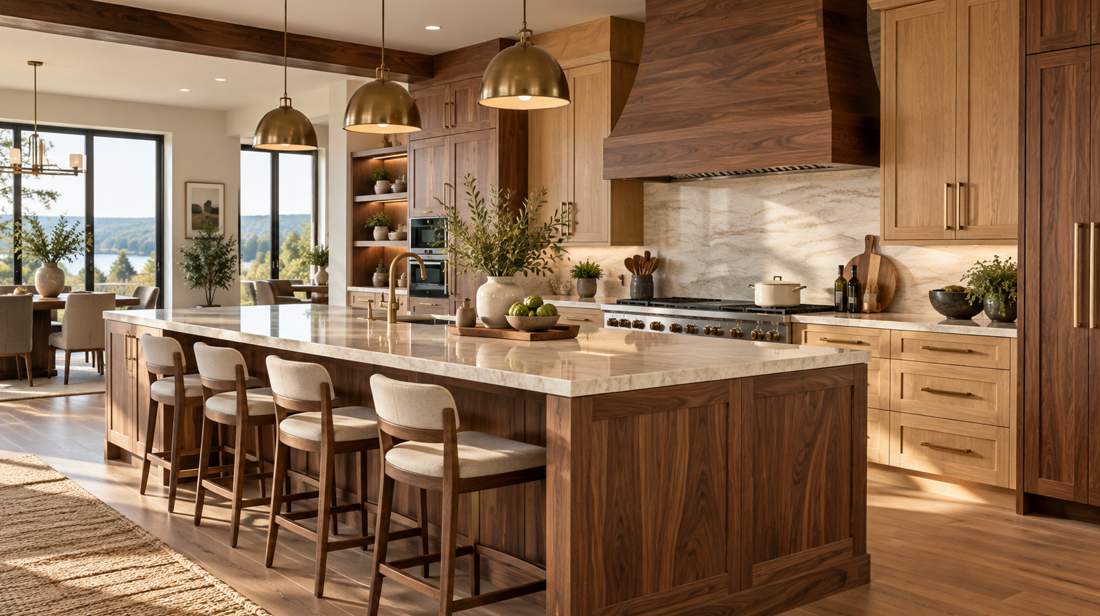
Natural wood is taking centre stage in kitchen design again — and in 2026, white oak and walnut are two of the materials defining the look.
After years in which painted white and grey cabinetry dominated renovation projects, homeowners are increasingly drawn to kitchens with visible grain, natural warmth, and a stronger sense of material character. White oak offers a light, refined appearance that works beautifully in organic and contemporary spaces, while walnut brings richer colour, distinctive grain, and an unmistakably luxurious presence.
For Passaic homeowners, the appeal goes beyond following a design trend. Natural wood cabinetry has the versatility to complement a wide range of homes and personal styles, from understated transitional kitchens to streamlined contemporary interiors. It can make a newly renovated space feel warm and established while still delivering the precision and functionality expected from modern cabinetry.
At Dash Cabinetry, cabinetry is selected as part of the complete kitchen vision — considering wood tone, door style, countertop, hardware, lighting, storage, and the way the room connects with the surrounding home.
If you are considering natural wood for your Passaic kitchen, here is what makes white oak and walnut such compelling choices in 2026, how they differ, and how to design with each successfully.
Why Natural Wood Cabinets Are Leading Kitchen Design in 2026
Natural materials have become a defining theme in current kitchen design.
Homeowners are moving towards spaces that feel warmer, more tactile, and less dependent on a single painted colour. Visible grain gives cabinetry depth that cannot be recreated in quite the same way with paint, and the variation found in real wood makes each kitchen feel more individual.
Industry research reflects that shift. Wood cabinetry has overtaken white as a leading cabinet colour choice among renovating homeowners, while kitchen professionals continue to identify visible wood grain and organic materials as important directions for 2026.
White oak is particularly prominent because it combines natural character with a relatively quiet grain and adaptable colour.
Walnut offers a different expression of the same trend. Its deeper brown tones, flowing grain, and natural variation create greater visual richness, making it especially effective when homeowners want cabinetry to become one of the defining design features of the room.
Natural Wood Fits the Move Towards Warmer Kitchens
The renewed interest in wood is connected to the broader move away from cool, grey interiors.
Kitchen palettes are becoming softer and more layered, with combinations such as:
Natural wood and warm white
Wood with cream or beige stone
Walnut with muted green
White oak with warm taupe
Wood cabinetry with aged brass or bronze
Natural grain paired with softly veined quartzite
These combinations make the kitchen feel connected to the rest of the home rather than designed as a separate, highly polished environment.
Wood also complements another significant 2026 preference: kitchens that feel timeless rather than overly themed.
A well-selected wood cabinet can adapt as surrounding colours, furniture, and decorative details change over time.
White Oak Cabinets: Light, Natural, and Exceptionally Versatile
White oak has become one of the defining woods of contemporary kitchen design.
Its popularity comes from balance.
It provides visible natural character without appearing overly rustic, and its lighter colour allows homeowners to introduce warmth without making the kitchen feel visually heavy.
Depending on the cut, finish, and stain, white oak can look calm and uniform or display more expressive grain.
That versatility allows the same species to suit very different kitchens.
What Does White Oak Look Like?
White oak generally ranges from pale beige and wheat tones to warmer light browns.
The finish has a significant influence on the final colour. A clear or natural finish can keep the wood relatively light, while warmer stains can emphasise honey, tan, or brown undertones.
Grain direction matters as well.
Rift-cut white oak is particularly popular in refined contemporary cabinetry because its grain appears straighter and more consistent. This creates a clean architectural effect while preserving the warmth and texture of natural wood.
Other cuts can produce more visible movement and character, which may suit a transitional or more relaxed kitchen.
Why White Oak Works So Well in Passaic Kitchens
White oak is adaptable enough to work in both generous kitchens and more compact spaces.
Because it is relatively light, it can cover a significant amount of cabinetry without creating the visual weight associated with darker woods.
This is particularly valuable when a kitchen includes:
Floor-to-ceiling storage
A large pantry wall
Cabinetry surrounding appliances
A substantial kitchen island
Tall upper cabinets
Open-plan sightlines into neighbouring rooms
For Passaic homeowners who want extensive storage while maintaining an airy atmosphere, white oak offers an appealing balance.
It also responds beautifully to natural light. Daylight brings out subtle variations in the grain, while warm evening lighting can give the cabinetry a softer, more inviting character.
How to Pair White Oak Cabinets with Countertops and Hardware
White oak's relatively neutral character makes it remarkably easy to combine with other kitchen materials.
The strongest pairings tend to either reinforce its natural warmth or introduce carefully controlled contrast.
Light Stone Creates an Organic, Airy Palette
Warm white and cream countertops are natural partners for white oak.
They maintain a bright overall kitchen while allowing the wood grain to provide texture.
Quartz with subtle veining can create a clean, practical look, while quartzite or another expressive natural stone can introduce greater movement.
For a calm organic-modern kitchen, consider white oak alongside stone with:
Warm white backgrounds
Soft beige movement
Gentle taupe veining
Muted grey-brown detail
Cream undertones
The result feels cohesive rather than sharply contrasted.
Dark Countertops Create Definition
White oak does not need to be paired with a light surface.
Charcoal, deep grey, or darker stone can create a more architectural look, particularly on an island.
This approach works especially well when darker colours appear elsewhere in the room through lighting, windows, furniture, or appliances.
The wood prevents the dark surface from feeling severe, while the countertop gives the cabinetry stronger definition.
Hardware Can Shift the Entire Personality
Hardware provides another opportunity to guide the mood.
Brushed nickel gives white oak a clean, understated finish.
Aged brass emphasises warmth and can make the kitchen feel more layered.
Dark bronze creates gentle definition.
Black hardware introduces stronger contrast and works particularly well when black architectural details are repeated elsewhere.
For homeowners exploring kitchen cabinets, it is valuable to review white oak samples beside the actual countertop and hardware finishes under consideration. Small undertone differences can substantially affect the finished composition.
Walnut Cabinets: Rich, Sophisticated, and Full of Character
If white oak represents the lighter side of the natural wood movement, walnut brings depth.
Walnut is prized for its rich brown colour and distinctive grain. Depending on the selection and finish, it can include chocolate, caramel, coffee, and subtle grey-brown tones within the same surface.
That natural variation gives walnut cabinetry an unmistakably crafted quality.
Rather than acting quietly in the background, walnut often becomes one of the kitchen's primary design features.
Walnut Feels Luxurious Without Relying on Ornament
One of walnut's strengths is that the material itself provides visual interest.
A simple flat-panel walnut cabinet can feel exceptionally refined because the colour and grain create depth without additional decorative detailing.
This makes walnut especially well suited to contemporary and transitional kitchens where homeowners want richness without excessive ornament.
The effect becomes even stronger when grain direction is carefully considered.
On large drawers, tall pantry doors, or broad cabinet panels, continuous or thoughtfully matched grain can make the cabinetry resemble finely crafted furniture.
Walnut Creates Warmth in Larger Kitchens
Walnut works particularly well in spaces that can comfortably accommodate deeper tones.
A large kitchen island is an excellent application because the wood can anchor the centre of the room without covering every surface.
Walnut can also define:
A beverage station
A pantry wall
Tall appliance cabinetry
A furniture-style hutch
Lower cabinets
A statement storage area
This allows homeowners to enjoy the richness of walnut while balancing it with lighter cabinetry elsewhere.
In a larger Passaic kitchen, walnut cabinetry throughout the room can also be striking, particularly when paired with generous natural light and lighter surrounding materials.
What Countertops Pair Best with Walnut Cabinets?
Because walnut already has considerable visual richness, the countertop needs to complement rather than compete with it.
Light stone is one of the most dependable choices.
Cream, warm white, and softly veined surfaces create contrast while allowing the walnut grain to remain prominent.
Warm White Stone Creates Elegant Contrast
A pale countertop above walnut cabinets immediately brightens the composition.
Pure, blue-toned white can sometimes create a sharper contrast than desired. Warmer whites and creams generally create a softer transition.
Natural stone with subtle brown, taupe, or warm grey movement can also connect beautifully with walnut's tonal variation.
Dramatic Stone Can Work — with Restraint
Walnut can also support a statement countertop.
Quartzite or marble-inspired surfaces with expressive veining can create a luxurious combination, particularly on a large island.
The key is deciding which material will carry the greatest visual emphasis.
If both the walnut grain and countertop pattern are highly active, the kitchen may need quieter flooring, backsplash, and hardware to provide balance.
A carefully planned palette gives each material enough space to be appreciated.
White Oak vs. Walnut: Which Is Better for Your Kitchen?
Both materials can create an exceptional natural wood kitchen, but they bring very different personalities to the room.
Feature | White Oak | Walnut |
|---|---|---|
Overall colour | Light beige to warm pale brown | Medium to deep rich brown |
Visual character | Calm, natural, refined | Rich, expressive, luxurious |
Grain | Often straight and understated | Flowing and distinctive |
Effect on a room | Light and airy | Warm and grounding |
Strong styles | Organic, contemporary, transitional | Contemporary, transitional, furniture-inspired |
Countertop pairings | Warm whites, quartzite, darker contrast stone | Cream stone, warm whites, expressive light stone |
Excellent applications | Full kitchens, tall storage, islands | Islands, feature cabinetry, full kitchens, beverage stations |
Choose White Oak for Lightness and Flexibility
White oak may be the stronger direction when the goal is to keep the kitchen bright while still introducing natural grain.
It works especially well where there is substantial cabinetry or where the homeowner wants an easy transition between the kitchen and lighter surrounding interiors.
Its understated character also gives countertops, lighting, and decorative details room to become more noticeable.
Choose Walnut for Depth and Presence
Walnut makes sense when cabinetry itself is intended to become a focal point.
Its colour creates greater depth, while the grain brings a furniture-like quality to the room.
It can be particularly effective for homeowners drawn to kitchens that feel warm, sophisticated, and distinctive.
Neither wood is universally superior. The better choice depends on the scale of the room, desired atmosphere, amount of natural light, surrounding materials, and the homeowner's individual taste.
Can White Oak and Walnut Be Used Together?
Yes — and when carefully planned, the combination can create a remarkably layered kitchen.
Using two different natural woods requires more precision than combining wood with a painted finish, but the result can feel highly bespoke.
The woods need a clear relationship rather than appearing randomly mixed.
For example, white oak perimeter cabinetry could be paired with a walnut island. The lighter oak keeps the outer cabinetry airy, while walnut gives the island greater visual weight.
Another approach is to use walnut as an accent within a primarily white oak kitchen.
Possible applications include:
Walnut open shelving
A walnut beverage station
Interior cabinet details
A furniture-style pantry
A walnut-backed display cabinet
Selected island panels
Keep the Rest of the Palette Controlled
When two woods already contribute colour and grain, surrounding materials benefit from restraint.
A quiet countertop, consistent flooring, and carefully selected hardware can help the two species feel intentional.
It is also important to compare physical samples.
Wood is a natural material, so online photographs cannot fully communicate grain, colour variation, sheen, or how the finish responds to the lighting in a particular home.
Door Style and Finish Matter as Much as Wood Species
Selecting white oak or walnut is one decision. Choosing how that material is expressed is another.
A slab door places greater emphasis on grain and creates a streamlined contemporary appearance.
A Shaker-inspired profile introduces more traditional structure while retaining the beauty of natural wood.
A very detailed door can create a more classic effect, although the grain needs to work harmoniously with the additional lines in the design.
Matte and Low-Sheen Finishes Highlight Natural Character
Many of today's natural wood kitchens favour matte or low-sheen finishes.
These allow grain and texture to remain visible without introducing excessive reflection.
A softer finish can also support the organic, understated character that makes natural wood so appealing in 2026.
The stain needs equal consideration.
White oak can range from pale and raw-looking to substantially warmer. Walnut can be left close to its natural colour or adjusted to create a more consistent tone.
The goal is not necessarily to change the wood dramatically, but to bring out the characteristics best suited to the overall kitchen.
Natural Wood Is More Than a 2026 Trend
White oak and walnut are highly visible in 2026 design, but their appeal extends beyond a single trend cycle.
Wood has been used in cabinetry and furniture for generations because it provides qualities that painted finishes cannot fully replicate: grain, tonal variation, warmth, and a direct connection to natural material.
What changes over time is the way designers use it.
Today's natural wood kitchens tend to feel cleaner, lighter, and more intentional. Rather than relying on heavy decorative detailing, designers are allowing the material itself to provide character.
That approach makes both white oak and walnut particularly suitable for homeowners who want a kitchen that feels current while retaining enduring appeal.
For Passaic homeowners, either material can become the foundation of a highly personalised kitchen.
White oak offers lightness, adaptability, and subtle texture. Walnut offers depth, warmth, and a richer visual presence. Used separately or thoughtfully combined, both can create cabinetry that feels as beautiful years from now as it does when first installed.
Dash Cabinetry works with homeowners to bring the complete kitchen together, from cabinetry configuration and wood finishes to countertops, storage, hardware, and installation. Through detailed planning and 3D renditions, clients can explore how materials will interact before the finished kitchen takes shape.
If you are considering white oak, walnut, or another natural wood finish for your Passaic kitchen, schedule a consultation with Dash Cabinetry and explore how natural materials can bring warmth, function, and lasting character to your home.

